
Get full access with a free account
Benefits of the Coloplast® Professional Educational platform
- Get full access to all educational content, events and resources
- Track your progress
- Share content with your collegues
- Share supporting material with your patient
Exudate:
- promotes cell growth;
- provides nutrients for cell metabolism; and
- helps to destroy dead or damaged tissue (also known as autolysis).7
Exudate also helps keep the wound environment moist, which makes the wound heal faster. In fact, studies show that moist wounds heal two to three times faster than dry wounds.7
As a wound begins to heal, the amount of exudate it produces usually decreases. However, many chronic wounds can get stuck in the inflammatory healing stage where harmful bacteria might develop.
As a wound heals, the level of exudate it produces will decrease. However, if a wound get stuck in the inflammatory stage of healing, it will continue to produce moderate to high levels of exudate.1
In such cases, exudate can:
- obstruct healing;
- slow down or prevent cell growth;
- interfere with growth factor availability; and
- contain elevated levels of inflammatory mediators; e.g. platelets, neutrophils, monocytes /macrophages and mast cells.7
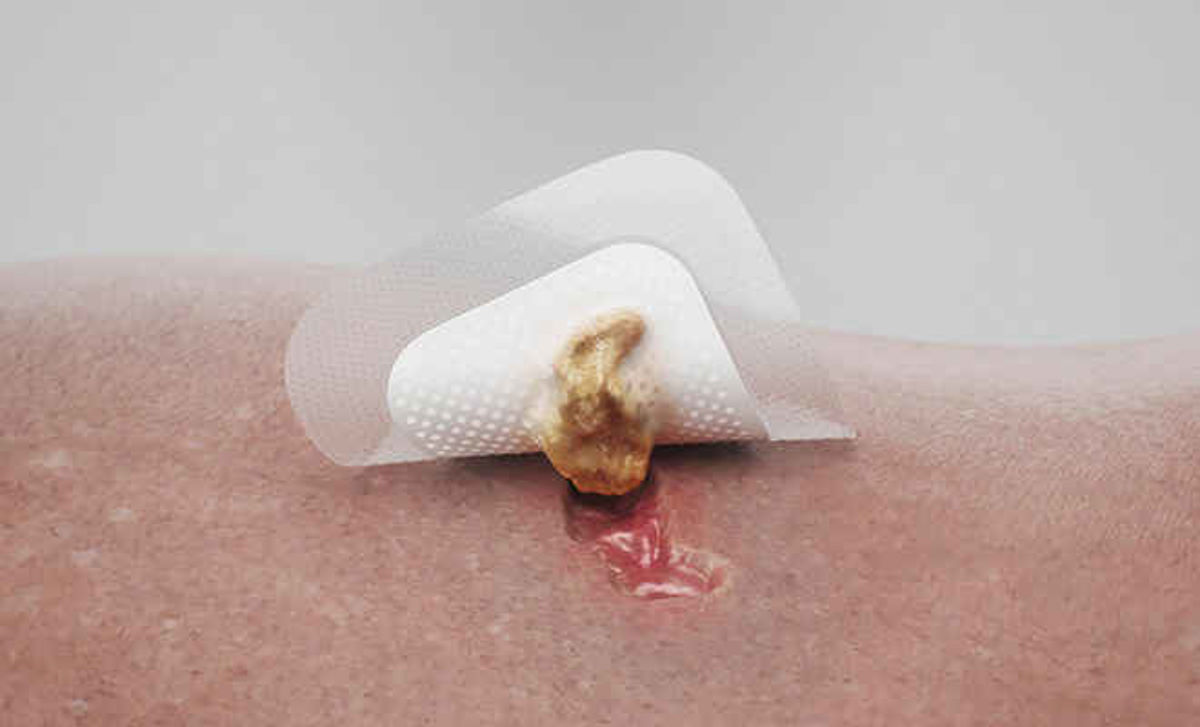
When a dressing doesn't fit perfectly, a Gap can form underneath it.
With conventional foam dressings a Gap can form between the wound bed and the dressing.
Why managing the gap is critical to prevent exudate pooling
When exudate accumulates in the gap between the wound bed and the dressing, it’s called exudate pooling. This is particularly a challenge in wounds with irregular topographies, cavities or pockets.9
Exudate can begin to pool when:
- the dressing doesn’t absorb the exudate properly;
- the volume of fluid is greater than the dressing can absorb; or
- the dressing conform closely enough to the wound bed.1
When pools of exudate form, bacteria can start to grow in the wound – which is what increases the risk of infection.3, 4, 10 And if the exudate leaks onto the wound edge and surrounding, or periwound, skin, the skin can become macerated. All of this delays the healing process.11, 12, 13, 14,
Exudate pooling not only affects the healing process; it can also have a significant impact on a patient’s overall quality of life. Having exudate that leaks or smells is obviously very uncomfortable for the patient. They might have to change their dressings more frequently, which interrupts their daily routines; worse case, they might stop going out because they feel embarrassed.7
So, by managing the gap, you can make sure that the wound has the right level of moisture and exudate, which will support the healing process, and improve your patient’s overall well-being.