Skip to content
  • Contact
  • For patients
    • Argentina
    • Australia
    • Austria
    • Belgium FR
    • Belgium NL
    • Brasil
    • Canada EN
    • Canada FR
    • Danmark
    • Deutschland
    • España
    • Finland
    • Finland
    • France
    • Global master
    • India
    • Israel EN
    • Italia
    • Japan
    • Nederland
    • Norway
    • Poland
    • Portugal
    • South Africa
    • Spain
    • Sweden
    • Switzerland DE
    • Switzerland FR
    • UAE
    • United Kingdom
    • United States
    • 中国 ZH
Coloplast Professional
  • Ostomy

    All content

    All content

    E-learning

    All e-learnings

    Articles

    All articles

    Videos

    Prevention Guide

    Patient cases

    All patient cases

    All evidence

    All evidence

    Short reads

    All shortreads

    All ostomy products

    Product catalogue

    Patient resources

    All patient resources Educational videos Instructions for use Assessment

    Tools for professionals

    All tools for professionals Fit Tool

    All events

    Event calendar

    All campaigns

    All campaigns

    Faglige nyhedsmails

    Faglige nyhedsmails - stomi
  • Bladder

    Videos

    All videos

    Articles

    All articles

    Webinars on demand

    All webinars on demand

    E-learning

    All e-learnings

    Patient resources

    Instructions for use Tools

    Tools for professionals

    All tools UTI Risk Factors Model

    Clinical evidence

    All clinical evidence

    All continence products

    Product catalogue

    All campaigns

    All campaigns
  • Bowel

    Patient resources

    All instructions

    Tools for professionals

    All tools for professionals

    Videos

    All videos

    E-learning

    All e-learning

    Articles

    All articles TAI LARS

    Webinars on demand

    All webinars on demand

    Shortreads

    All shortreads

    Evidence

    All evidence

    All bowel products

    Product catalog
  • Wound

    Conferences

    EWMA

    Webinar

    Surgical Wounds

    E-learning

    All E-learnings Diabetic Foot Ulcer Leg Ulcers Moist Wound Healing Pressure Injury Management Pressure Injury Prevention Skin Integrity Wound Assessment and Management Wound Healing Wound Infections

    Podcast

    Assess, Prepare and Treat

    Workshops

    Workshops

    How to treat chronic wounds

    Wound Care Pathway

    How to treat specific wound types

    The Wound Type Specific Pathways Surgical wound dehiscence Pressure injury ulcer Malignant wound Skin tear Burn Diabetic foot ulcer Venous leg ulcer

    Wound Care knowledge

    Stages of wound healing Wound debridement Exudate management The role of the skin Infection and biofilm Moist wound healing Pressure injury prevention

    Tools and guides - Download center

    Product selection tool Evidence Cutting guide Wound Pathways Triangle of Wound Assessment

    How to use our products

    How to apply Gelling Fibers How to apply Foam Dressings How to apply SIlicone Foam Dressings

    Featured products

    Comfeel® Alprep® Pad Biatain® Silicone Fit Biatain® Silicone Biatain® Fiber Ag Biatain® Superabsorber

    Product catalog

    Painful wounds Infected wounds Non-infected wounds Heavy exuding wounds Medium exuding wounds Exuding wounds Dry wounds

    Type of dressings

    Hydrocolloid dressings Contact layer Silver dressings Foam dressings Silicone foam dressings Gelling fibre dressings

    Get support

    Get support
  • Interventional Urology

    Erectile restoration

    Clinical and Economic Evidence Clinical Learning Webinars How to eLearning

    Male continence

    Clinical and Economic Evidence Clinical Learning eLearning

    Testicular replacement

    Clinical and Economic Evidence Clinical Learning How To eLearning

    More on men's health

    eLearning Podcasts Event Calendar

    Female Continence

    Clinical and Economic Evidence Clinical Learning Webinars How To eLearning

    Pelvic Floor Reconstruction

    Clinical and Economic Evidence Clinical Learning How To eLearning

    eLearning

    All eLearning

    Events

    Event Calendar

    Stone Management

    Clinical and Economic Evidence Coloplast TFL Drive Laser & Fibers Clinical Learning eLearning

    BPH

    Clinical and Economic Evidence Clinical Learning eLearning

    Soft Tissue Management

    Clinical Learning eLearning

    Events

    Event Calendar
Log in
Coloplast Professional
New Mobile navigation Shopping basket Shopping basket Shopping basket Print Icon Icon / delete Temp Info

This site is intended for Healthcare Professionals only. The site content is intended for informational- and educational purposes and may not be appropriate for all jurisdictions. Coloplast does not provide medical advice. Responsibility for patient care resides with the health care professional. For detailed device information on products presented, including instructions for use, contraindications, effects, precautions and warnings, please consult the product’s Instructions for Use (IFU) prior to use.

Yes, I am a Healthcare Professional No, I am not a Healthcare Professional

Before conducting a wound assessment, it's essential to recognise the signs of underlying arterial or venous disease. Understanding these indicators helps guide appropriate treatment decisions. For a deeper look at key risk factors and clinical signs to watch for, refer to the understanding leg ulcer section.

A full lower limb assessment, diagnosis and treatment plan should be completed within 14 days or in conjunction with your local policy.

Following a full lower limb assesment including an Ankle Brachial Pressure index, patients with suspected venous leg ulcers and adequate arterial supply, strong compression of 40mmHg therapy should be offered.

Personalised care is essential, including discussing causes, treatment options and supporting self‑management. Clear referral pathways should also be in place to allow direct access to relevant specialists without needing a GP referral.
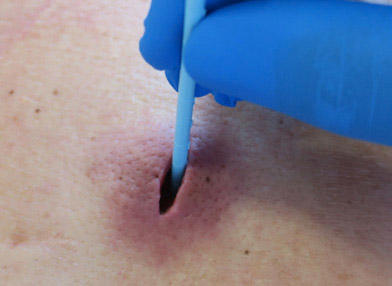
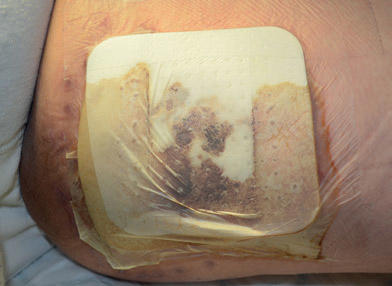
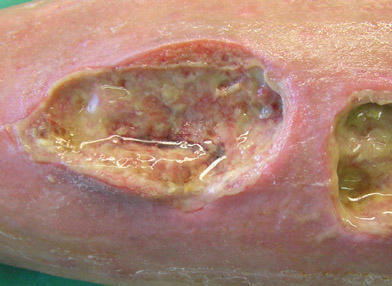
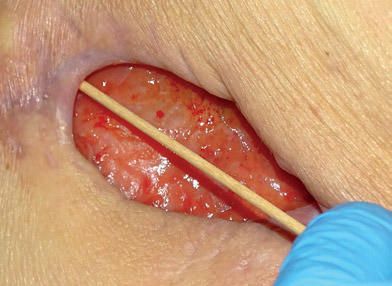
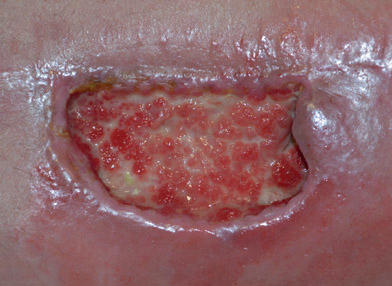
Assess the wound bed:
  • Measure the wound depth
  • Assess what tissue types can be observed i.e. slough, necrosis.
  • Check for exudate pooling
  • Determine the amount of wound exudate in both wound and dressing (how saturated is the dressing?).
  • Assess the colour, viscosity and odour of the wound exudate.

Measure the wound depth

How deep is the wound?

Assess what tissue types can be observed i.e. slough, necrosis.

Was the previous dressing the most appropriate?

Check for exudate pooling.

Do you see exudate pooling?

Assess the wound edge and periwound skin:
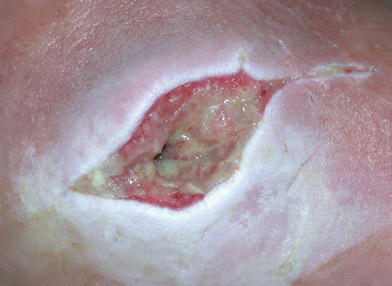
  • Assess the wound edges (are they attached, rolled, inflamed, undermined, advancing, macerated?).
  • Assess the periwound skin (is it intact, fragile, inflamed, macerated?).

Wound maceration

Is the wound edge and periwound skin macerated?

Is the wound edge undermined?

Is the wound edge undermined?

Are there rolled wound edges?

Are there rolled wound edges?

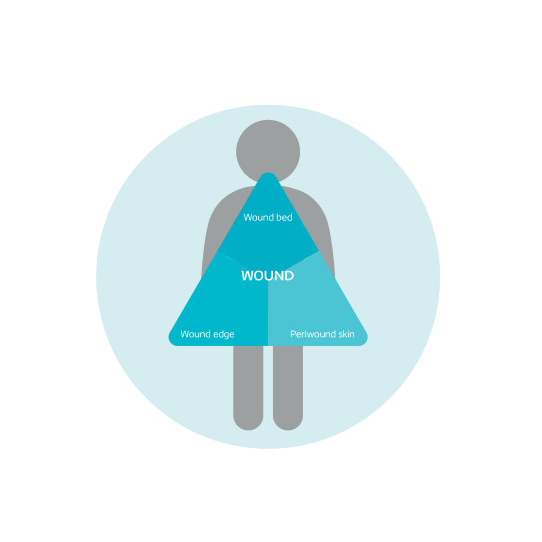
Triangle of Wound Assessment

Wound Assessment can be complex with reasons for this being multifactorial. Using a simplified wound assessment framework such as the Triangle of Wound Assessment can help simplify the process.

  • Frequency of wound assessment will depend on the condition of the patient, the condition of the wound and the care setting
  • A holistic wound assessment should, as a minimum, be:  Every two weeks in an acute setting, or, every four weeks within a primary care and community setting.

Always look for signs of lymphoedema/lympho-venous disease as part of your clinical assessment

Wound Assessment form

Wound Assessment form

PDF Download the Triangle of Wound Assessment 2 pages
Preview

Ankle Brachial Pressure Index (ABPI)

The Ankle Brachial Pressure Index (ABPI) is a quick, non‑invasive test that checks how well blood is flowing to the legs and feet.

It works by comparing two blood pressure readings:

  • one taken at the arm (brachial pressure)
  • one taken at the ankle

Then the ankle pressure is divided by the arm pressure to give a number — the ABPI.

What the number tells you

  • A normal ABPI means good blood flow to the legs.
  • A low ABPI suggests narrowed or blocked arteries, which may affect healing.
  • A high ABPI can indicate stiff or calcified arteries, often seen in people with diabetes.

Why it matters

Understanding ABPI helps clinicians decide:

  • whether compression therapy is safe
  • how well a wound (like a leg ulcer) is likely to heal
  • whether further vascular assessment is needed

ABPI values should always be interpreted in context of signs and symptoms.

Less than 0.5 suggests severe arterial disease

  • Compression treatment is contraindicated
  • Refer for an urgent vascular assessment

Between 0.8 and 1.3 suggests no evidence of significant arterial disease

  • Compression may be applied safely for most people

Greater than 1.3 suggest arterial calcification

  • Compression may be used with caution
  • Refer for a vascular assessment  

Greater than 0.5 to less than 0.8 suggests the presence of arterial disease or mixed arterial/venous disease

  • Compression should be avoided but reduced compression could be used under specialist advice
  • Refer for a vascular assessment 


1. NICE (2021) How should I interpret ankle brachial pressure index (ABPI) results? Available at: Interpretation of ABPI | Diagnosis | Leg ulcer - venous | CKS | NICE

The aim of wound preparation is to accelerate healing or to facilitate the effectiveness of management and treatment plans. It is an approach that should be undertaken at each wound care intervention. When planning to prepare the wound you need to take into consideration:

  • Assessment
  • Clinical judgement
  • Treatment goals
  • Pain levels

When should we be cautious with wound preparation?

  • If a patient has a wound on a lower limb and is known to be diabetic (this may be suitable but will require specialist advice).
  • If a patient has a known arterial flow concern or poor localised tissue perfusion.
  • If healing ability is impaired because of medications or underlying medical condition (e.g. cytoxic medications, immunosurpressed).
  • Malignancy / Fungating wounds

Learn more about the importance of wound preparation, different debridement methods, and effectively using Alprep Pad for mechanical debridement.

"It's not what we put on the wound that heals it; it's what we take off"
“

"It's not what we put on the wound that heals it; it's what we take off"

Donna Welch

Podiatry Operations Manager

How to develop a treatment and care plan

Once your diagnosis of the leg has excluded arterial insufficiency, you are ready to determine the need for any additions to the standard treatment planning procedure.


Be prepared to manage exudate to protect the periwound skin, as venous leg ulcers are often highly exudating. (This will reduce over time with the correct level of compression therapy).


Frequently undertake a patient reported pain assessment, as leg ulcers are ranked as the most painful compared to other wounds.1

You should proceed according to the result of your ABPI: 

  • In case your ABPI is more than 0.8, arterial, involvement can be ruled out and compression therapy can be considered at 40mmHg. 

  • In case your ABPI is between 0.5 and 0.8 refer for advice regarding level of compression. 

  • In case your ABPI is less than 0.5 do not compress and refer immediately for vascular assessment.

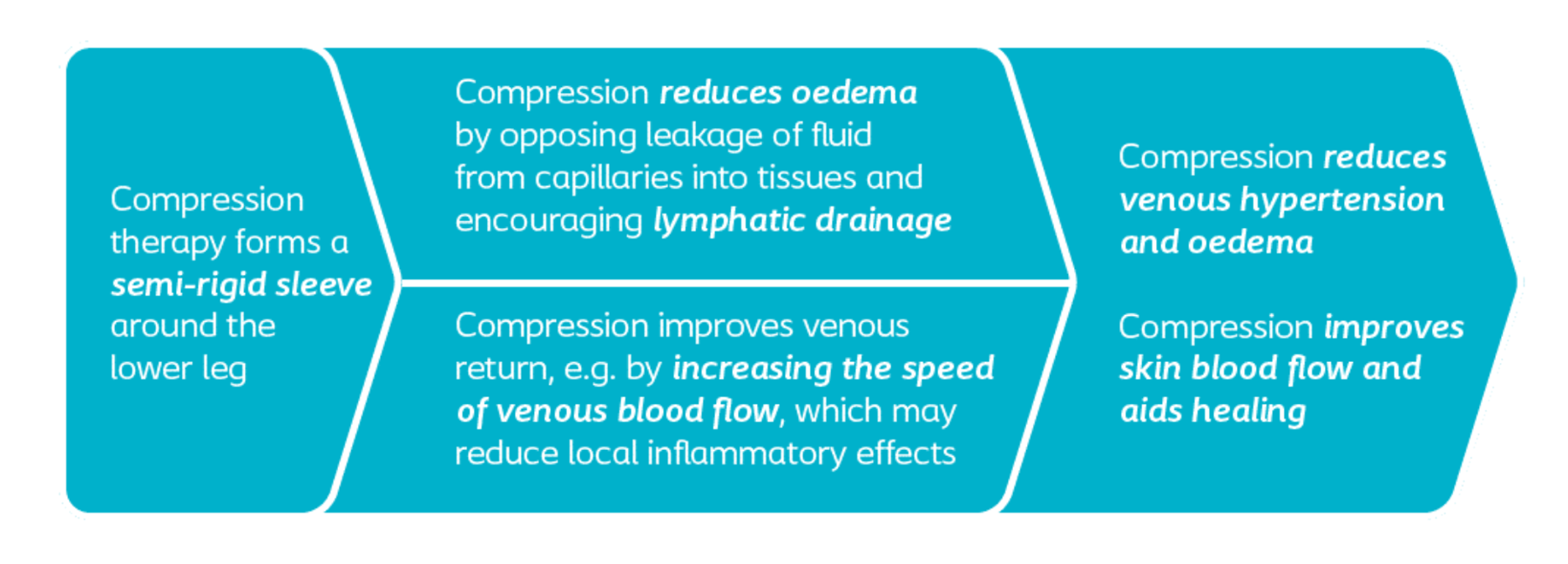
    Compression therapy

The concept of compression therapy

➔ Choose the correct type of compression by taking relevant factors into account: The severity of the disease, the anatomical characteristic of the leg/ankle, required frequency of applications, and the functionality of the patient: Patient preference, mobility, lifestyle and likely concordance.2


➔ Check for signs of infection at each dressing change, as infection and biofilm are common in venous leg ulcers. Use the IWII infection continuum and management guide.

Identifying treatment objectives

Wound assessment and preparation leads to identification of objectives. We should aim to support an optimum healing environment for the wound.

Remember – Identifying and treatment of any underlying cause is integral to wound healing!

What is your treatment objective? Consider the following:

Management / prevention of...

  • Exudate or exudate pooling
  • Protection of the peri-wound skin
  • Maceration or excoriation
  • Depth or cavity to the wound
  • Infection


The National Wound Care Strategy Programme recommends the application of a simple, low-adherent dressing with sufficient absorbency.

There are various dressing types available to us as clinicians, knowing what each does is essential.

Commonly used dressings can be broken down into categories:  

No infection present

For use under Compression Hosiery / Leg Wraps

Biatain® Silicone

Biatain® Silicone or Biatain® Silicone Lite

Conforms to the wound bed
Absorbs vertically
Retains exudate

Biatain Silicone with 3DFit Technology improves healing by conforming to the shape of the wound up to 2 cm deep*. This creates an optimal wound healing environment that reduces leakage along with the risk of maceration and infection.

*Tested in vitro, Conformability may vary across product design

Find out about Biatain® Silicone

No infection present

For use under Compression Bandaging

Biatain® Silicone Non-Border

Biatain® Silicone Non-Border

Conforms to the wound bed
Absorbs vertically
Retains exudate

Biatain® Silicone Non-Border consists of a soft and conformable polyurethane foam with a vapour permeable top film that is bacteria- and waterproof, a gentle and perforated silicone adhesive, and turquoise protective films.

Find out more
Biatain Non Adhesive

Biatain® Non-Adhesive

Unique 3D foam structure for superior absorption
Minimised risk of maceration and leakage (1)
Long wear time

Biatain® Non-Adhesive is a soft and conformable polyurethane foam dressing that effectively absorbs and retains wound exudate (1,2).

Biatain®  Superabsorber

Biatain® Superabsorber

Biatain Superabsorber provides optimised absorption and retention

Biatain® Superabsorber is a soft, non-adhesive dressing that can manage high volumes of exudate, whilst protecting the wound edges and delicate peri-wound skin from maceration.

Learn more

Infection present

For use under Compression Hosiery / Leg Wraps

Biatain®  Silicone Ag

Biatain® Silicone Ag

Absorbs vertically
Conforms to the wound bed
Traps and retains bacteria

Biatain Silicone Ag is a conforming dressing with 3DFit Technology that fills the gap and reduces exudate pooling to promote optimal healing conditions.

Find out more
Biatain Ag Non Adhesive

Biatain Ag Non Adhesive

Biatain® Ag Non-Adhesive can be used for a wide range of exuding wounds with delayed healing due to bacteria, or where there is a risk of infection

Patient experiencing pain

For use either under Compression Hosiery / Leg Wraps or Compression Bandaging

Biatain® Ibu

Biatain® Ibu

Biatain® Ibu Soft-Hold is a soft and flexible absorbent foam dressing containing ibuprofen and a gentle adherent layer covering less than 50% of the foam surface (1).

Strong compression therapy for suspected venous disease with an adequate arterial supply  

Hosiery kits for active ulcers:  

  • A type of medical compression therapy most commonly used for the management and healing of venous leg ulceration
  • Kits consist of two medical compression garments designed to be worn one on top of the other
  • Most kits contain two liners and one stocking
  • Designed to deliver 40mmHg of pressure at the ankle reducing to 20mmHg at the calf
  • Recommendation is to be worn for 24 hours but outer layer to be removed at night
  • Available in off-the-shelf forms or made to measure
  • Facebook
  • Linkedin
  • 1800-653-317
  • Mon - Thur -9 am - 5 pm
    Fri 9 am - 4 pm
  • xxx@coloplast.com
  • Coloplast Group Holtedam 1 3050Humlebaek Denmark
    • Cookie policy
    • Legal Aspects
    • Privacy Notice
    • Coloplast products - instructions for use
    • Accessibility