
Get full access with a free account
Benefits of the Coloplast® Professional Educational platform
- Get full access to all educational content, events and resources
- Track your progress
- Share content with your collegues
- Share supporting material with your patient
A skin tear is a traumatic wound that is caused by a mechanical force. The mechanical force could be shear or friction, or it could be the result of removing an adherent dressing.1
Skin tears can lead to partial or full separation of the skin’s outer layers (epidermis and dermis). They can also lead to a separation of both the epidermis and the dermis from the underlying structures (a full-thickness wound). The severity of a skin tear varies, depending on the depth of the wound. However, skin tears do not extend through the subcutaneous layer of the skin.1
They can occur on any part of the body, but are most common on the hands, arms and legs.1
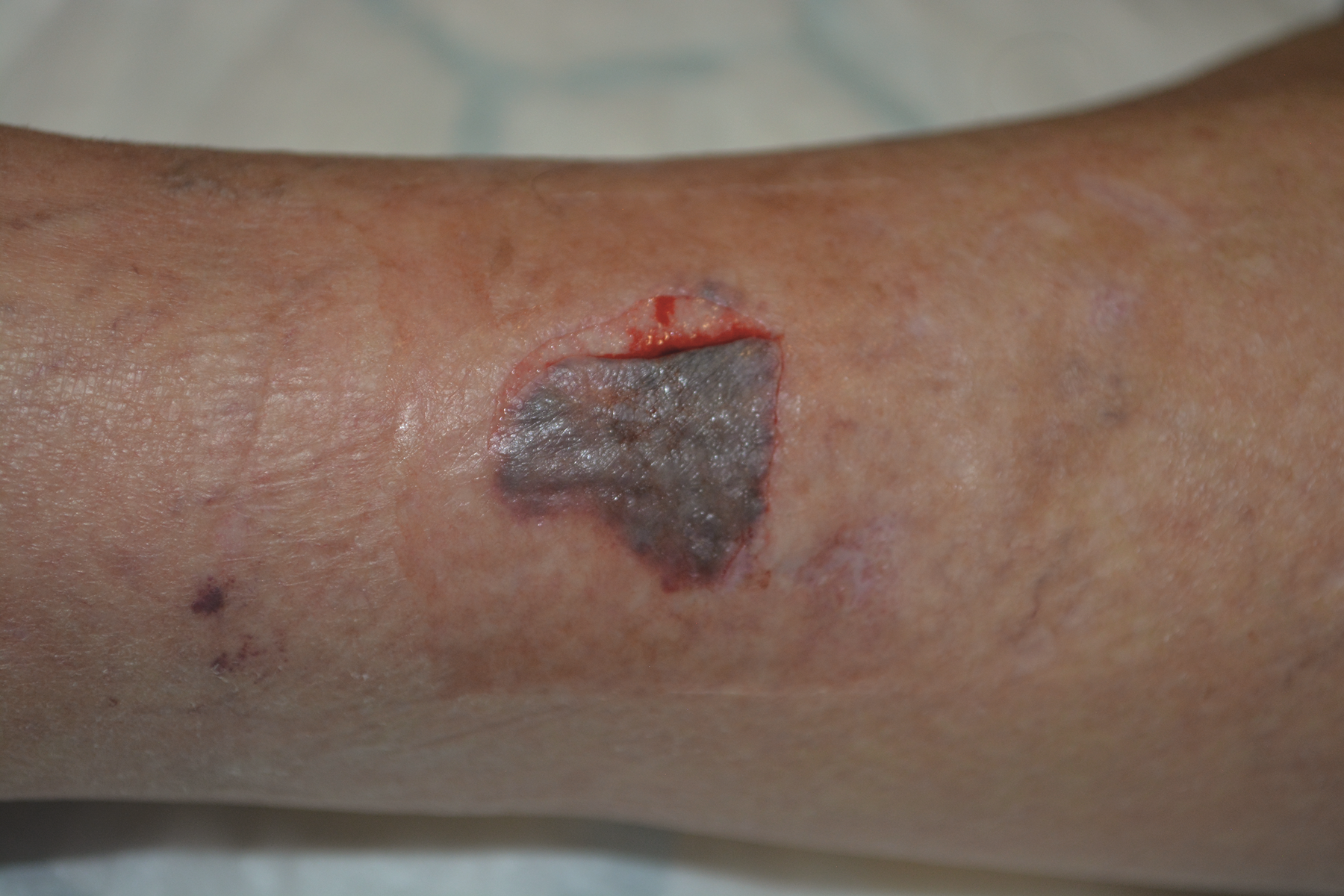
Type 1 Skin Tear
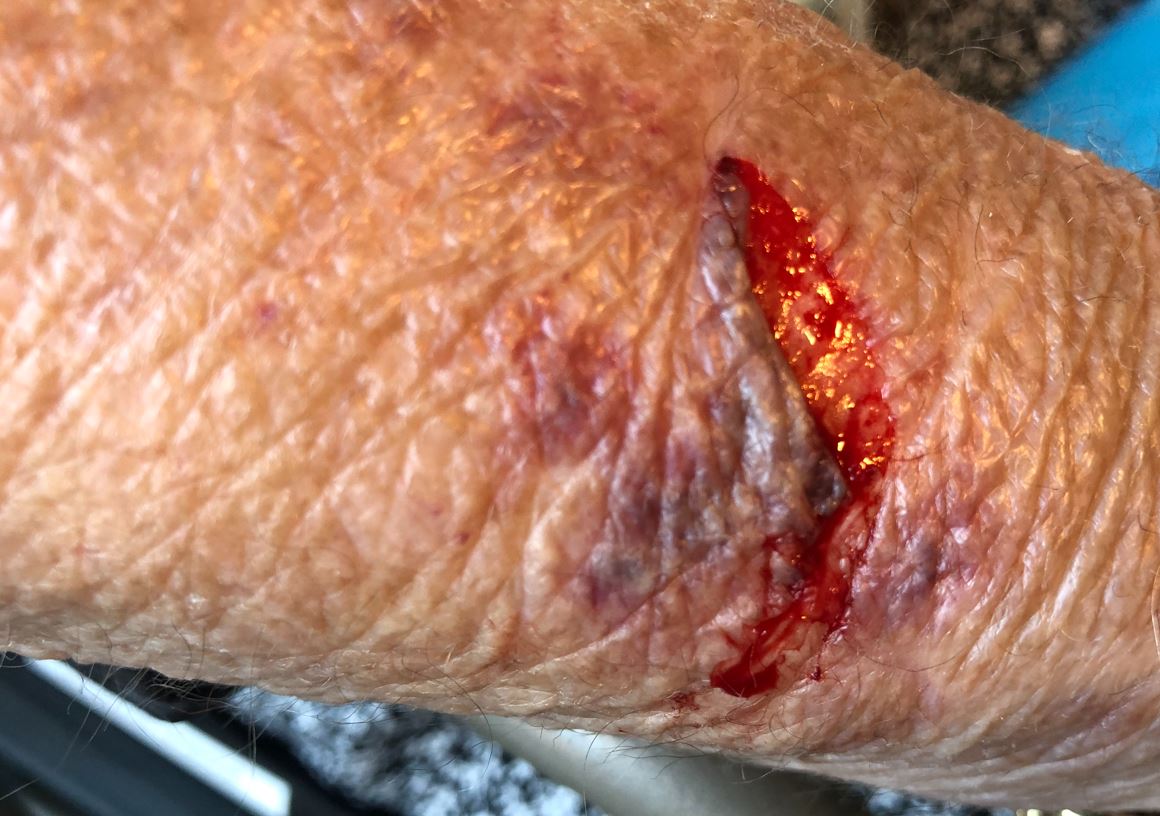
Type 2 Skin Tear
Who are at risk of getting a skin tear?
Our skin is the body’s first line of defence. It acts as a protective barrier, and prevents damage to our internal tissues and organs. However, if our skin becomes frail or fragile, it’s more likely to be damaged. This increases the risk of skin tears, as less force is needed to cause a traumatic injury.2
While skin tears can happen in a variety of patients, the elderly population is particularly at risk. As we age, our skin becomes more fragile. The skin’s ability to heal itself slows down, which can make it even more vulnerable to skin tears.2
If an elderly patient needs help to carry out daily tasks, such as moving around or washing, this can increase the risk of skin tears. Additionally, elderly patients who have other illnesses, are undergoing certain medical treatments (e.g. chemotherapy) or are on certain medications (e.g. steroids), can have an even higher risk of developing skin tears.1
How do I prevent skin tears in my patient?
To prevent your patient from getting a skin tear, you can take two steps. One, find out if your patient is at risk. And two, take steps to minimise your patient’s risk. Let’s look at two tools that can help you to do this.
Tool #1: The Skin Tear Risk Assessment Protocol
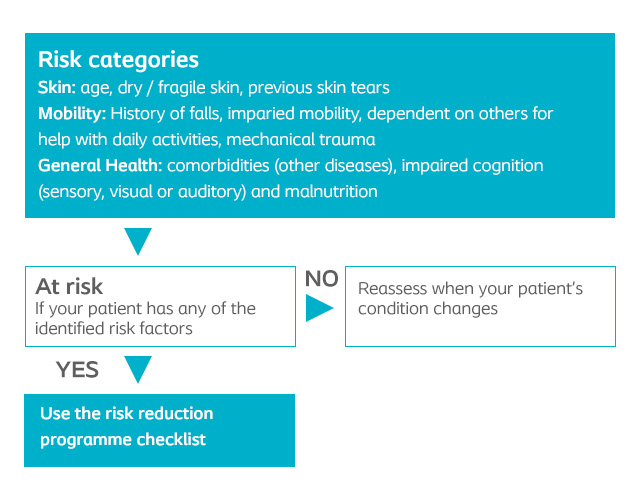
To find out if your patient is at risk, you can use the Skin Tear Risk Assessment Protocol (See Figure 2).1
This protocol looks at three main risk factors:
- skin,
- mobility, and
- general health.
Figure 2: Skin Tear Risk Assessment Protocol1
Tool #2: The Risk Reduction Programme Checklist
If you find out that your patient is at risk, use the Risk Reduction Programme Checklist (See Table 2). This will help you protect your patient from skin tears. The checklist gives you a list of tips and suggestions based on the same three factors as the risk assessment: skin, mobility and general health. By controlling the risk factors around your patient, you can help them maintain skin health and avoid injury.1
| Risk factor | What you should do |
|---|---|
|
Skin |
|
|
Mobility |
|
|
General health |
|